PCB Testing in the Automotive Industry

Open the bonnet of a car built in 2026, and you won’t find much that looks like an engine bay from twenty years ago. You’ll find dozens of printed circuit boards, quietly running everything from the braking system to the infotainment screen. Electronics made up around 10% of an average car’s cost in 1980. By 2010 that had climbed to roughly 35%, and it’s on track to reach about 50% by 2030, according to Statista’s automotive electronics research.
That share keeps climbing every year as advanced driver-assistance systems, EV powertrains and connected-car features move from optional to standard. Most articles about this trend stop at “PCBs are revolutionising the automotive industry” and leave it there. That’s true, but it skips the more interesting, and more important, question: how do manufacturers actually know these boards will work once they’re bolted into a car doing 70mph in the rain? The answer is testing. Specifically, in-circuit testing (ICT), paired with functional testing (FCT). It isn’t the flashy part of the automotive electronics story, but it’s the part that determines whether all that innovation actually survives contact with the real world.
TL;DR
- Electronics now make up close to half of a car’s value, up from around 10% in 1980, so far more of a vehicle’s safety and function depends on PCBs than it used to.
- In-circuit testing (ICT) checks individual components on a board for manufacturing defects, while functional testing (FCT) checks the whole board works as intended. Automotive manufacturers need both.
- Automotive PCBs face stricter demands than consumer electronics: vibration, temperature extremes, CAN/LIN bus communication and years of continuous use, all with safety-critical consequences if something fails.
- A field defect caught after a vehicle ships can mean a recall, not just a warranty claim, which is why testing at the manufacturing stage matters so much.
- We build ICT and FCT fixtures for automotive manufacturers across platforms including HP3070, Agilent, Keysight, Teradyne and GenRad, with turnkey support from DFT review through to commissioning.
The automotive PCB boom
Market estimates for automotive electronics vary depending on which research firm you ask and how they define the category, but the direction is consistent across all of them. GMI Research put the global automotive electronics market at around $218 billion in 2020, while other firms sizing the broader market have put figures for similar years anywhere from roughly $230 billion to $260 billion. The exact number moves depending on scope, but every major forecast points toward sustained, high growth through the early 2030s. What’s driving it is easier to agree on. As safety regulations tighten, manufacturers are adding more sensors, cameras and LiDAR to vehicles, and demand for higher-spec automotive PCBs rises with it. Electric vehicles add a whole separate category of demand through battery management systems and power electronics. That growth is genuinely exciting from an engineering standpoint. But it also means more boards, more layers, more components and more failure points, packed into systems where a fault isn’t just an inconvenience. It can be a safety issue.
Why automotive PCBs need methodical testing
-

- Example of a complex Functional Test Fixture
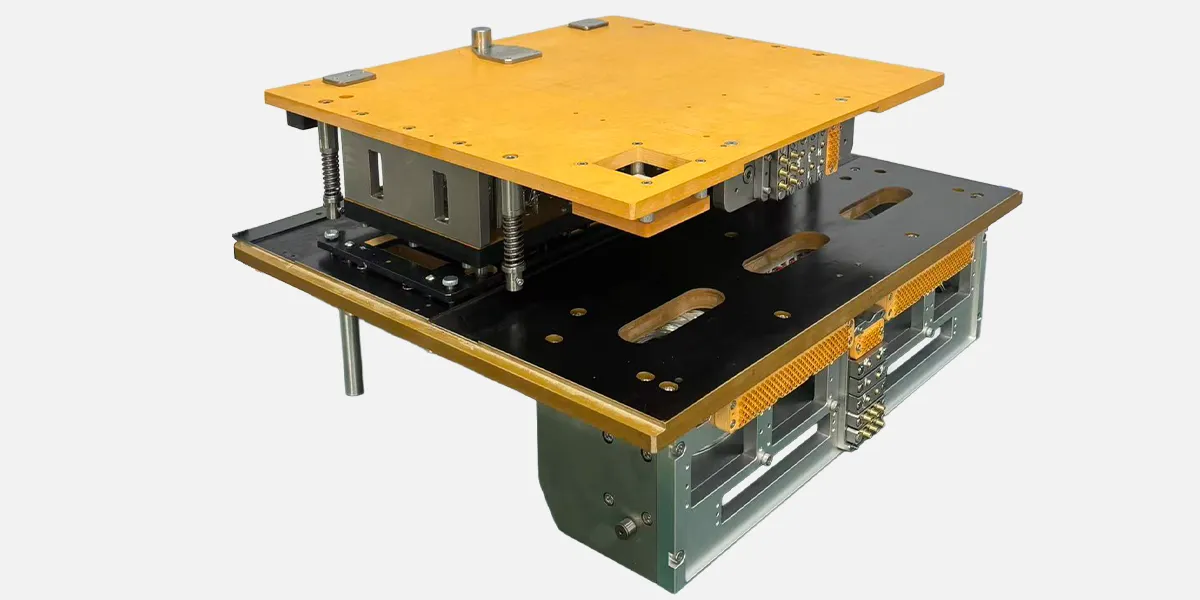
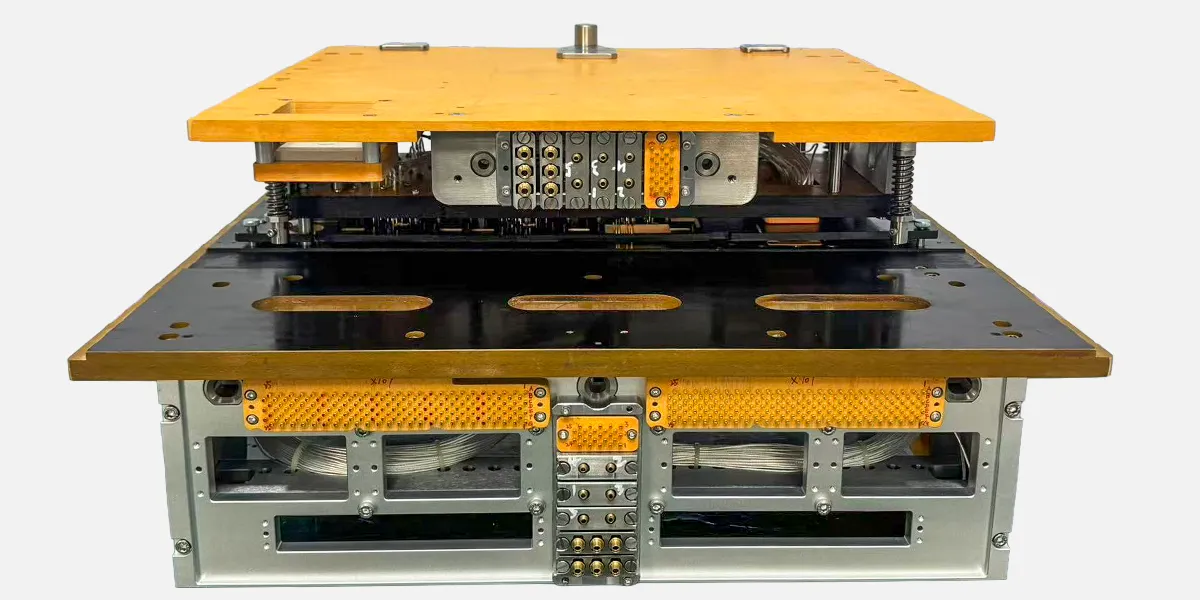
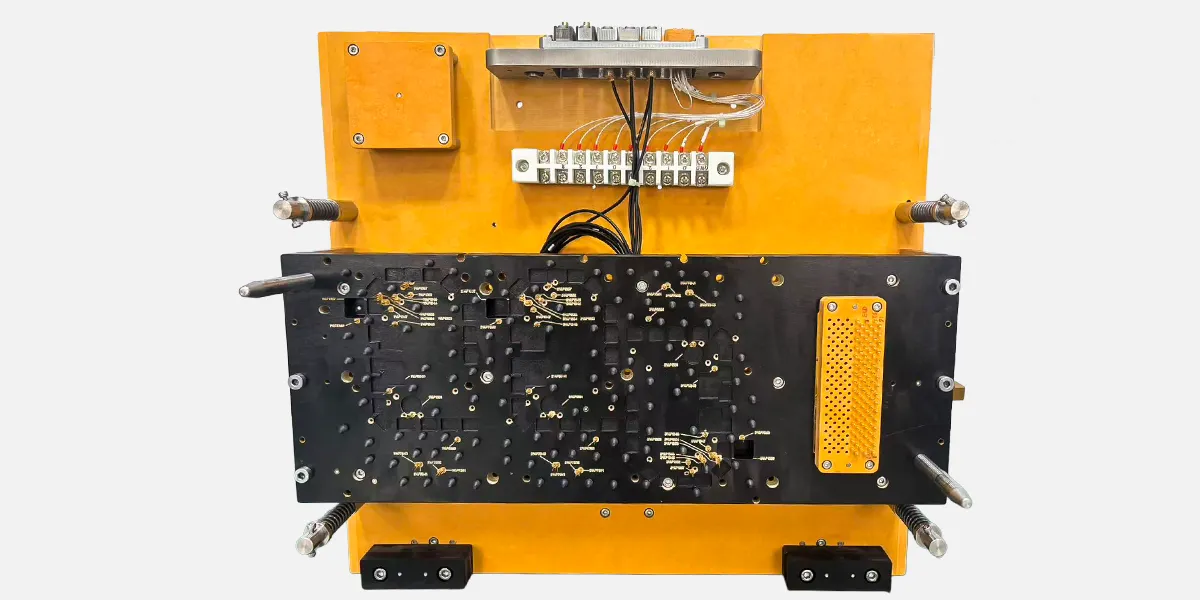
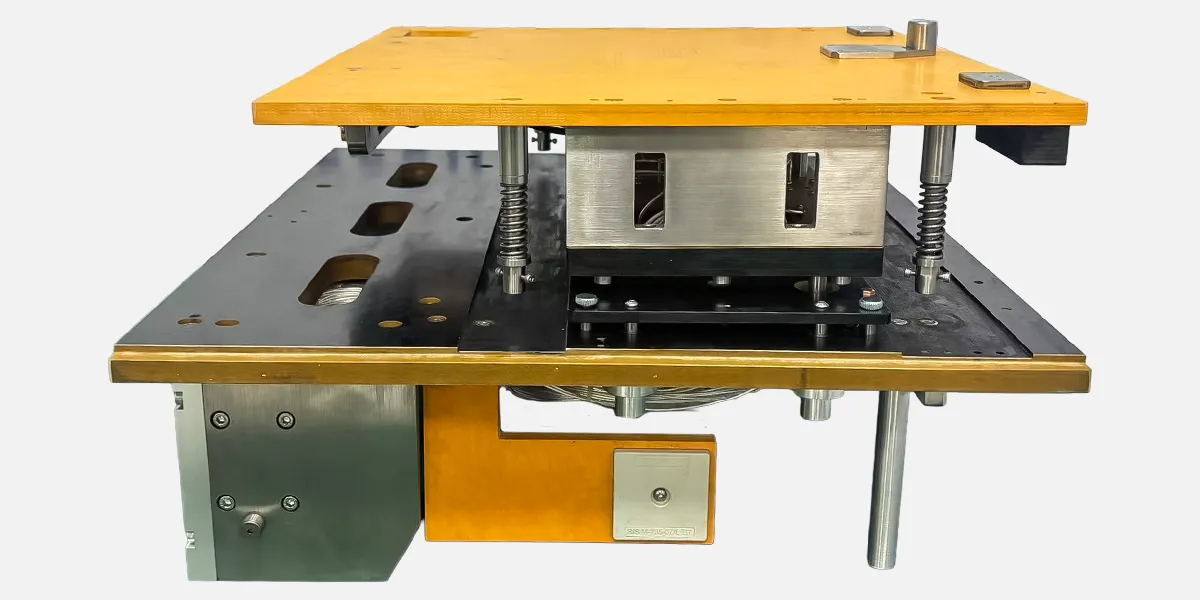
Consumer electronics can often tolerate the odd defect slipping through. Automotive electronics don’t get that grace. A board that controls braking, airbag deployment, steering assistance or communication between vehicle modules has to work correctly every single time, in extreme heat, in freezing cold, under constant vibration, for years. That’s why the automotive sector treats PCB testing as a mandatory production stage rather than a final sanity check. It’s also, according to industry market analysis, one of the biggest structural challenges the sector faces: automotive PCBs have to meet increasingly stringent reliability standards while getting more compact and complex at the same time, which makes them genuinely harder to test than most other electronics categories.
What in-circuit testing actually does
In-circuit testing (ICT) checks the individual components on a populated PCB, including resistors, capacitors, ICs and solder joints, for manufacturing defects like shorts, opens, incorrect values or misplaced parts. It’s done using a custom fixture, often called a bed of nails, which makes precise electrical contact with test points across the board and runs it through a series of automated electrical checks. Forwessun has a dedicated explainer on what in-circuit testing is and how it works if you want the fuller technical breakdown.
-
- Example of an Automotive ICT Fixture


The appeal of ICT is speed and precision at scale. It’s fully automated, so it fits into high-volume production lines without slowing them down, and it pinpoints exactly which component or connection is at fault rather than just flagging that something is wrong. For a manufacturer running thousands of boards a day, that kind of fast, specific fault data is what keeps defect rates, and warranty claims, under control. ICT is usually paired with functional testing (FCT), which checks the board as a working system rather than component by component: does it actually perform the job it was designed for, under real operating conditions? Together, ICT and FCT cover both “is this board built correctly” and “does this board actually work”, which is the combination automotive manufacturers need before a PCB is cleared to go anywhere near a vehicle.
What makes automotive ICT different
Testing an automotive PCB isn’t the same job as testing a PCB for a kitchen appliance.
A few things make the automotive case harder:
• Communication protocols matter. Many automotive boards need to be tested for CAN and LIN bus communication, the protocols that let different modules in a vehicle talk to each other, not just basic electrical continuity.
• Environmental tolerance is part of the spec. Boards need to be verified against vibration, temperature swings and long-term durability requirements that consumer electronics simply don’t face.
• Volume and variety collide. Automotive suppliers often need fixtures that can handle both high-volume production runs and highly specialised, low-volume test requirements, sometimes on the same line.
• The cost of a miss is much higher. A field failure in automotive electronics can mean a recall, not just a warranty claim, which makes catching defects at the test stage far cheaper than catching them after the vehicle has shipped. This is where a testing partner with genuine automotive experience, not just general PCB experience, starts to matter.
At Forwessun, we’ve spent over 50 years in ICT and FCT for the Automated Test Equipment industry, with automotive as one of our core sectors alongside aerospace, medical and industrial electronics.
Our automotive testing page covers CAN and LIN Bus communication testing specifically, and our client list includes automotive names like Continental, Tesla, BMW, Aumovio and BorgWarner. Our fixtures work across major platforms including HP3070, Agilent and Keysight, Teradyne and GenRad, and we cover the full chain from test software and DFT review through to full turnkey solutions, including tools like our Smart Alignment Board for improved probe contact accuracy.
That end-to-end coverage means one relationship can handle the whole testing pipeline, rather than stitching together separate vendors for fixtures, software and support. You can see more examples in our case studies and project gallery.
A short checklist for evaluating an automotive PCB testing partner
If you’re a manufacturer or engineer weighing up test partners, a few questions tend to separate the generalists from the specialists:
1. Do they have automotive-specific experience? CAN/LIN bus testing and safety-critical component knowledge, rather than just general PCB testing experience.
2. Can they support both ICT and FCT, or only one half of the picture?
3. What platforms do their fixtures work with? Are they locked into one system, or can they build for HP3070, Agilent, Keysight, Teradyne, GenRad and others?
4. Do they offer turnkey support, from DFT review through installation and ongoing maintenance, or just a one-off fixture build?
5. Can they scale from high-volume production runs to specialised, lower-volume requirements without a full re-tool?
The bottom line
The automotive PCB story is usually told as an innovation story: more sensors, more compute, more electric vehicles, more autonomy. All true. But none of it holds up without a testing stage that’s just as sophisticated as the boards it’s checking. As automotive PCBs get denser and more safety-critical, in-circuit testing stops being a manufacturing formality and becomes one of the few things standing between a well-designed board and a real-world failure. If you’re bringing an automotive PCB into production and want a testing partner that’s spent decades solving exactly this problem, get in touch with our automotive testing team, or get a personalised quote to talk through your specific fixture or system requirements.
FAQ
What is in-circuit testing (ICT) used for in automotive PCBs?
ICT checks individual components on an assembled automotive PCB, such as resistors, capacitors and solder joints, for manufacturing defects like shorts, opens or incorrect values, before the board goes into a vehicle.
What’s the difference between ICT and functional testing (FCT)?
ICT tests individual components for manufacturing faults. FCT tests the finished board as a whole system, verifying it performs its intended function under real operating conditions. Automotive manufacturers typically use both.
Why is automotive PCB testing stricter than consumer electronics testing?
Automotive PCBs often control safety-critical systems, such as braking, steering and airbags, and must perform reliably under vibration, extreme temperatures and years of continuous use. A defect that would be a minor inconvenience in consumer electronics can be a safety issue or a full vehicle recall in automotive applications.
What is CAN and LIN bus testing?
CAN (Controller Area Network) and LIN (Local Interconnect Network) are communication protocols that let different electronic modules in a vehicle talk to each other. Testing for CAN and LIN bus communication verifies that a PCB can correctly send and receive data across the vehicle’s network, not just that its individual components work.
What test fixture platforms are commonly used for automotive PCB testing?
Common platforms include HP3070, Agilent, Keysight, Teradyne and GenRad, with custom “bed of nails” fixtures built to match each board’s specific test points and requirements.