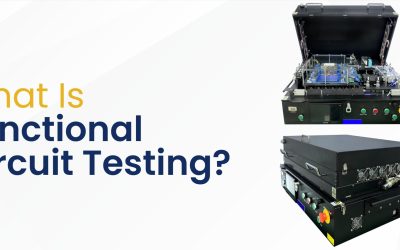
Automatic Scanning For Test Fixtures
At Forwessun, our In-Circuit and Functional test fixtures can be fully customised with integrated automatic barcode scanning, giving manufacturers a reliable way to improve identification, traceability, and data accuracy throughout the test process. Automatic barcode scanning refers to the use of embedded technology to automatically read barcodes or QR codes, eliminating the need for manual checks.

What is Automatic Scanning?
Automatic barcode scanning involves integrating scanners within test fixtures to autonomously read and verify codes on the Device Under Test (DUT). Instead of relying on manual checks, the fixture reads the barcode or QR code printed on the DUT, ensuring every board is correctly recognised before a single test step begins.
By building the scanner directly into the fixture, the system can track each board through the workflow, capture data for quality reporting, and confirm configuration variations automatically. Automatic scanning ensures precise tracking and data capture, enhancing test accuracy and reliability.
This process removes uncertainty and ensures the right test is always applied to the right unit. It also supports a more streamlined, dependable production environment, allowing operators to focus on throughput rather than manual verification.
Adjustable Axis
To support different board layouts and code placements, each scanner is mounted on an adjustable frame with full movement across all three axes. This allows precise positioning for optimal readability, regardless of where the code sits on the DUT. Adjustable axis refers to the capability of the scanner to move along multiple directions to accurately read codes.
Viewing Window
Fixtures typically include a clear Perspex window to maintain the correct scanning distance and provide unobstructed visibility, while an integrated mirror allows the system to read codes located on the underside of the board without repositioning it. The viewing window facilitates uninterrupted scanning by ensuring the scanner maintains a consistent distance from the DUT.
The result is consistent, accurate scanning from multiple angles with minimal operator intervention.

What Scannable Codes are Supported?
2D Data Matrix

A 2D Data Matrix code is a small, square or rectangular grid of black and white cells that encodes information in two dimensions, both horizontally and vertically, rather than just left to right like a traditional barcode. 2D Data Matrix refers to a high-density barcode format capable of storing extensive data within a compact area.
These systems also support a wide range of code formats, including 2D Data Matrix codes: compact, high‑density, machine‑readable patterns capable of storing up to 2,335 alphanumeric characters.
Commonly used in manufacturing for tracking and traceability, Data Matrix codes offer strong error correction and can be printed in very small rectangular spaces, making them ideal for modern PCB designs where available space is limited.
Barcode
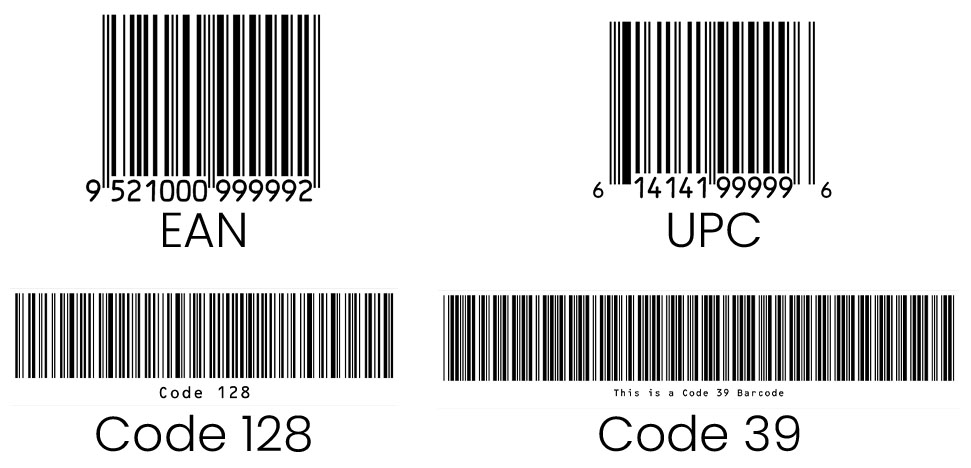
A barcode is a machine-readable pattern of parallel vertical lines (bars) and spaces of varying widths that encode information in one dimension, left to right only. Barcodes are widely used in various industries for identification and inventory management because they offer a simple and effective means of tracking products.
The manufacturing industry typically uses three types of barcodes:
- Code 128 – The most common in electronics manufacturing, compact and supports up to 128 alphanumeric characters
- Code 39 – Older format, widely supported but less dense due to limited ASCII compatibility.
-
EAN/UPC – Primarily a retail format, occasionally carried over into manufactured goods.
QR Code

A QR code is a two‑dimensional, square grid of black and white modules arranged in a pattern that can be scanned from any orientation. Unlike traditional linear barcodes, QR codes encode data in both horizontal and vertical directions, allowing them to store significantly more information in a compact space. QR code refers to a type of matrix barcode that can store large amounts of data and is easily scannable from various angles.
QR codes can hold up to 4,296 alphanumeric characters. Their built‑in error‑correction capabilities (up to 30%) ensure reliable decoding even when the code is partially damaged, obscured, or printed on challenging surfaces.
Widely used across manufacturing and consumer applications, QR codes are ideal for PCB testing. Their fast readability, error tolerance, and ability to be printed at small sizes make them a practical choice for traceability and automated identification within ICT and functional test processes.
For PCBs, Data Matrix and QR dominate because they can be printed extremely small and still be reliably scanned.
What Happens If a Fixture Can’t Scan a PCB?
When a barcode, data matrix, or QR code can’t be read, the test process typically pauses and flags the PCB as unidentified. Depending on how the fixture and test software are configured, several things can happen:
- Operator Prompt: The system asks the operator to rescan or manually identify the PCB
- Automatic Retry: The scanner attempts to re-read the barcode.
- Fail-Safe Handling: The PCB may be re-diverted or logged for investigation.
- Test Blocked: Some manufacturers may enforce a ‘no ID, no test’ policy in order to maintain traceability.
How Do Scanners Integrate With ICT / FCT Testers.
Barcode scanners inside test fixtures typically integrate through:
Hardware Interfaces:
- USB connections
- RS-232 serial connections
- Ethernet connections
- Other solutions are also available
Test Software Integration:
The scanner feeds data directly into the test system. Common test platforms include:

Why Automatic Scanning Matters in PCB Manufacturing.
As PCB assemblies become more complex and production volumes increase, manual identification methods introduce unnecessary risk. Automatic barcode scanning ensures every DUT is correctly identified before testing begins, eliminating operator error and guaranteeing that the correct test program, limits, and configuration are applied every time. Automatic scanning in PCB manufacturing refers to the use of technology to automate the identification and validation of components, reducing errors and improving efficiency.
In high‑mix, high‑volume environments, this level of automation is essential for maintaining throughput, reducing scrap, and ensuring full traceability across the entire manufacturing lifecycle.
Why Does Traceability Matter?
Traceability ensures every PCB can be uniquely identified throughout its lifecycle. It matters because it enables:
- Defect Containment: Quickly isolate affected batches or components
- Regulatory Compliance: Required in industries where safety is critical.
- Process optimisation: Analyse failure trends
Many industries rely heavily on traceability, Forwessun installs barcode scanners most commonly for:
- Automotive
- Aerospace & Defence
- Medical Devices
- Telecommunications
Learn More
More information about our automatic scanning solutions can be found here.
For information on our ICT Fixture capabilities click here.
To find out more about FCT Fixture solutions, click here.
Get a Quote
Click here to get a personalised quote
FAQs
What are the benefits of automatic scanning?
- Eliminates manual data entry errors
- Ensures the correct test program is always selected
- Improves traceability for audits and compliance
- Reduces operator workload and training requirements
- Supports high‑mix production with multiple variants
- Improves first‑pass yield by preventing mis‑testing
- Provides reliable data for SPC, MES and quality reporting
What industries require scanning capabilities?
Automatic scanning is essential in sectors where traceability is mandatory:
- Automotive (IATF 16949)
- Medical devices (ISO 13485)
- Aerospace & Defence (AS9100)
- Industrial automation
- Telecommunications & networking
- Consumer electronics with variant control
These industries rely on accurate identification to maintain compliance and ensure product reliability.
Why build the scanner into the fixture?
Integrating the scanner directly into the fixture ensures:
- Consistent scanning distance
- Controlled lighting
- Repeatable positioning
- Faster cycle times
- No need for operator handling
- Reduced risk of mis‑reads
- Seamless automation
This is far more reliable than handheld or external scanners.