PCB and PCBA Testing: What’s the Difference and Why It Matters
Whether you’re scaling production or validating your first PCBA prototype, choosing the right test strategy at the right stage is critical. At Forwessun, we’ve helped many clients reduce rework, improve yield, and bring products to market faster. This guide explains PCB vs PCBA testing, the most effective methods for each, and practical tips on which to use and when.
Key takeaways:
- PCB (Printed Circuit Board) – the bare board before components are fitted. Testing ensures correct fabrication, avoiding costly assembly errors.
- PCBA (Printed Circuit Board Assembly) – PCB after components are mounted. Testing verifies assembly and electrical function.
- Common methods: AOI, ICT, Flying Probe, X-ray/AXI, Functional Test, Boundary-scan.
- Why it matters: Early testing reduces rework, saves cost, improves yield, and increases product reliability.
- Forwessun approach: We provide turnkey testing solutions, from design-for-test guidance to AOI, ICT, FCT, and ongoing support.
What is a PCB?
PCB stands for Printed Circuit Board. A PCB is the bare board produced during fabrication. It contains copper tracks, vias and pads that connect components electrically once they are fitted. A typical bare PCB will also include silkscreen markings and solder mask. At Forwessun, we can support clients in verifying these bare boards before assembly, ensuring quality from the very start of the production flow.

The purpose of testing a PCB is to verify that the board was manufactured correctly before components are fitted. Common bare-board checks include continuity testing, insulation resistance, and bare-board optical checks to confirm the artwork and copper patterns are correct. Catching problems at this stage avoids loading a faulty board with components, which can save significant time and cost in the production flow.
What is a PCBA?
PCBA means Printed Circuit Board Assembly. A PCBA is the PCB after components have been mounted and soldered. Once assembled, the board becomes an active part of the product and must undergo PCBA testing, ensuring correct assembly and electrical function.

PCBA testing focuses on assembly faults such as missing components, wrong orientation, poor solder joints, and electrical defects like shorts or opens. Methods for PCBA testing check both the physical assembly and the board’s electrical behaviour. Verifying assemblies before final product build reduces field returns and helps demonstrate product reliability.
Why PCB and PCBA testing matters
Testing finds manufacturing faults early, such as missing components, poor solder joints, shorts and opens. Fixing issues early in the production flow is much cheaper than reworking completed assemblies, and fewer faults in production means fewer failures in the field. Good test coverage also helps you prove product reliability and meet quality expectations. At Forwessun, we’ve seen how integrating the right testing strategy at each stage can dramatically improve first-pass yields and shorten time-to-market.
Common testing methods and when to use them
Automated Optical Inspection (AOI)
AOI uses cameras to check component placement and solder joints. It is fast and effective at finding visible defects after pick-and-place and reflow. Use AOI for both PCB and PCBA verification to catch orientation errors, missing parts and obvious solder issues.
In-Circuit Test (ICT), bed-of-nails
ICT uses a fixture with many probes to make direct electrical contact with test points. It checks for shorts, opens and component values. ICT gives deep coverage and is very suitable for high-volume production where speed and repeatability matter.
Flying probe test
Flying probe uses moving probes that contact test points one by one. It is flexible and has a much lower upfront cost than an ICT fixture. Flying probe is ideal for prototypes, low-volume runs or when a bed-of-nails fixture is not yet justified.
X-ray / AXI (Automated X-ray Inspection)
X-ray inspection reveals defects under hidden joints such as BGAs. If your board has hidden solder joints, AXI will find voids and insufficient solder that AOI cannot see.
Functional test (FCT) and burn-in
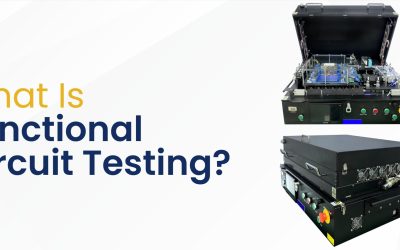
Functional testing powers the board and exercises its behaviour under realistic conditions. It is the final check to confirm the PCBA performs to specification. Burn-in stresses the board over time to uncover early-life failures.
Boundary-scan (JTAG)
Boundary-scan is a software-controlled test method for devices that support JTAG. It helps test connections where physical probing is difficult and is useful for certain digital checks.
PCB vs PCBA – Key Differences at a Glance

Practical tips to plan testing early
Plan for testability during design. Add accessible test points, consider component placement for probe access, and think about which tests you will need during production. Design for Test, or DfT, saves time later and reduces the chance of awkward rework. Small changes in layout or adding a few test pads can avoid expensive fixture redesigns down the line. In our experience at Forwessun, early DfT consideration often saves clients weeks of rework and ensures smoother NPI transitions.
How Forwessun approaches PCB and PCBA testing
At Forwessun we tailor the test strategy based on your requirements, testing volume and industry requirements. During development we can use AOI and flying probe to validate assemblies quickly. Our full turnkey approach covers fixture design, software and support from a single supplier, which simplifies project management and speeds delivery. We can provide ICT test solutions, functional test solutions and wireless test solutions.
DfT consultation is built into our process from the start. Our engineers review your board layout before fixture design begins, flagging testability issues early to avoid costly redesigns later. Working with customers in varied sectors, we’ve delivered integrated ICT and FCT systems that reduced debug time and improved test coverage, all built and supported in-house.
Get expert PCB and PCBA test guidance from Forwessun
If you are unsure which tests suit your product stage and volumes, we can help. Talk to Forwessun for a practical review and a test plan tailored to your needs. We can recommend the most cost-effective solution and provide a quote for fixtures and software. Contact us for a technical review or a quote
Click here to find out more about the PCB, and PCBA testing solutions that Forwessun offers.
Additional FAQs
What is the difference between PCB and PCBA?
A PCB is the bare board. A PCBA is the same board after the components have been fitted and soldered.
Which test finds missing components and wrong orientation?
Automated Optical Inspection is best at catching missing parts and incorrect orientation because it inspects the board visually.
When should I use flying probe instead of ICT?
Use flying probe for prototypes and small batches when you want test coverage without the cost of a dedicated fixture. Use ICT for larger production runs where test speed and repeatability are important.
Can functional testing replace ICT?
Functional testing confirms the board operates correctly, but it may miss some manufacturing faults that ICT would catch. For full coverage, use a combination of tests.
About this Post