
Mechanical Detection of Components in In-Circuit Test Fixtures
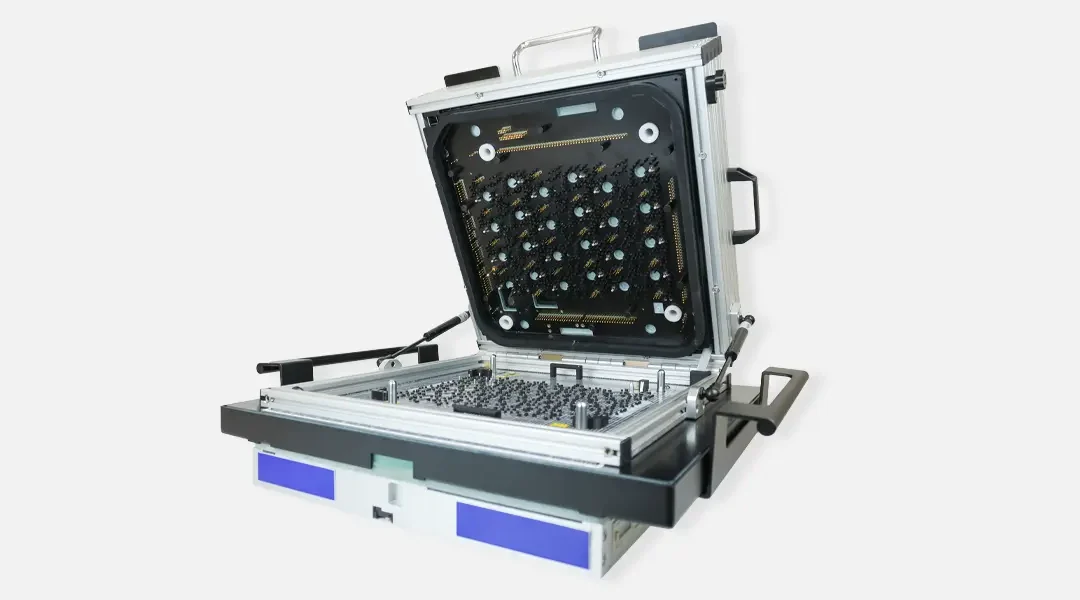
Mechanical detection of components is an essential process in in-circuit testing, designed to ensure the correct assembly and functionality of the Device Under Test (DUT). This method involves the use of specialiced probes to verify both the presence and orientation of components.
Component Presence Detection
This process uses either a switch probe or a wide-headed probe, which compresses and activates against a component on the DUT. The primary function is to detect whether the component is present. This step is vital in confirming that the DUT is populated with the correct parts before further testing begins.


Board Presence Verification
Switch probes can also serve a dual purpose by detecting the presence of the entire board within the fixture. This ensures that the fixture will not run a test if no board is detected, preventing unnecessary test cycles and ensuring that only properly loaded boards are tested..
Polarity Check
In addition to verifying presence, mechanical probes can also check the polarity of certain components when applicable. This is crucial for components that must be oriented in a specific direction to function correctly. A polarity check ensures that components are not only present but also correctly aligned, preventing potential malfunctions during the board’s operation.
Summary
Mechanical detection of components is a critical process in ensuring the reliability and accuracy of in-circuit testing. By verifying both the presence and correct orientation of components, as well as the overall presence of the board itself, this method helps to prevent errors and ensure that only properly assembled devices are tested. This not only enhances the quality of the final product but also streamlines the testing process, reducing the risk of costly rework or failures in the field.